Math Bros Review: The Educational Game That Doesn’t Talk Down to You
I have a complicated relationship with educational games. I love the idea of them, but I’m often less enthusiastic once I actually start playing. Some are so focused on teaching that they forget to be entertaining. Others bury a few basic questions beneath layers of unrelated animation and call the result “learning.”
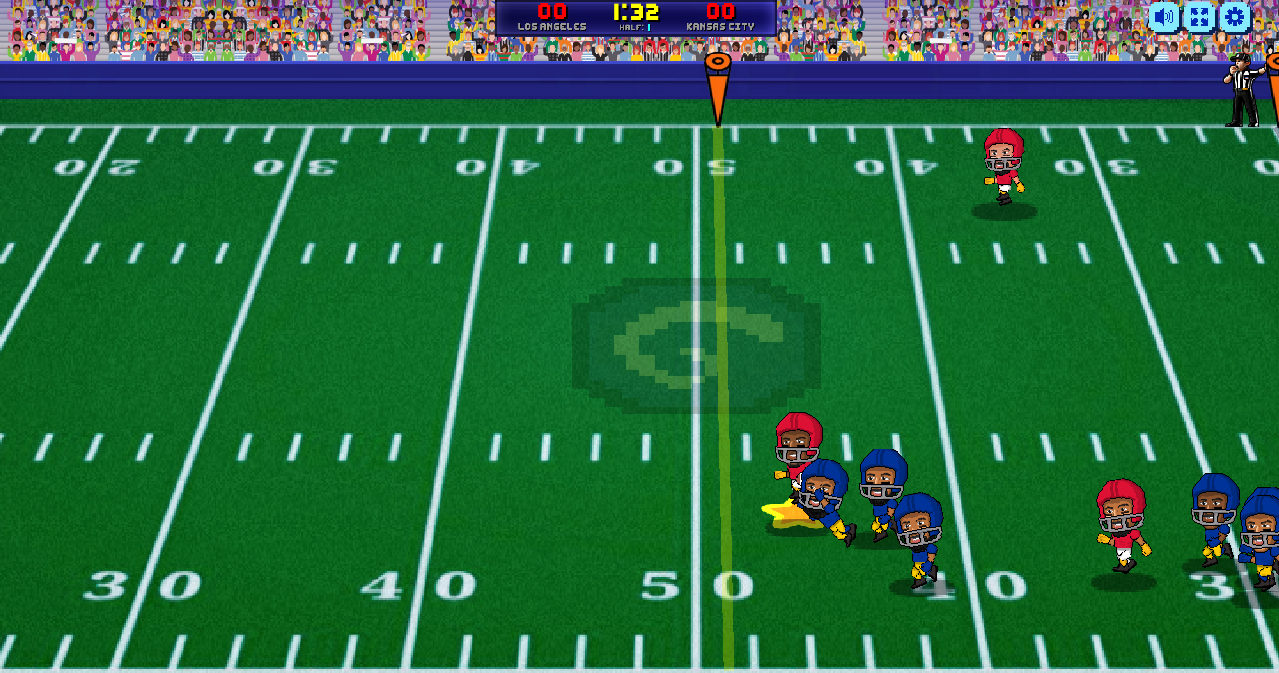
Math Bros lands somewhere more sensible. It doesn’t pretend that you aren’t practicing arithmetic, yet it gives that practice momentum by placing it inside an arcade-style American football game. Correct answers help your team advance toward the end zone. Wrong answers can stop a drive. The concept is easy to understand, and more importantly, the math has a visible effect on what happens next.
That may sound like a small detail. Honestly, it makes a huge difference.
When players can see why an answer matters, even a routine calculation gains a little tension. You’re not solving 8 × 7 because it happens to be question number fourteen on a worksheet. You’re solving it because your team needs to keep moving. The arithmetic remains the same, but the context changes how it feels.
A Straightforward Start
Math Bros runs in a web browser and uses a compact control scheme. You navigate with the arrow keys and use the space bar to confirm actions. The official Math Bros website recommends Google Chrome for the best experience, although other browsers may also run the game.
You choose a team and work through offensive situations by selecting plays and answering the associated math problems. There isn’t an intimidating collection of menus standing between you and the game. Within a short time, you understand the loop: make a choice, solve a problem, and see how the play develops.
For beginners, that clarity is a major advantage. You don’t have to learn complex football controls while also thinking about numbers. The game keeps the physical action simple so the mental challenge remains at the center.
I’d recommend starting at a comfortable difficulty, even if the first questions appear easy. Use the opening matches to understand the timing and presentation. Once you can answer accurately without feeling rushed, raise the difficulty. Confidence is useful in mental math, but confidence built on guessing tends to disappear quickly.
The Pressure Is Part of the Fun
Math Bros becomes more entertaining when you stop treating it like a quiet exercise. The football theme creates urgency, and multiplayer can add the uncomfortable knowledge that another human being is waiting for you to make a mistake.
You may know the answer under normal circumstances, yet suddenly doubt yourself because the match is close. I’ve seen the same thing happen during board games. Someone can calculate perfectly well until another player starts tapping the table and asking whether they’re finished. Then even basic subtraction becomes a philosophical problem.
The game rewards players who stay calm. Fast answers help, of course, but careless speed can cost more than a slightly slower correct response. A player who solves eight problems accurately will often outperform someone who rushes through ten and misses half of them.
This balance gives newcomers a realistic route to improvement. You don’t need lightning-fast reactions. You need a dependable process.
Start by reading the operation carefully. Then make a rough estimate before choosing an exact answer. If you’re calculating 21 × 9, you already know the result should be close to 200. An answer such as 1,890 should immediately look suspicious. That quick sense check takes almost no time once it becomes a habit.
Breaking problems into manageable pieces also helps. For 21 × 9, you could calculate 20 × 9 and then add another 9. We often assume good mental-math players simply “see” answers instantly, but most of them are using shortcuts like this. They’re simplifying the work, not performing magic.
What Experienced Players Should Focus On
If you’ve already spent time with Math Bros, your next goal should be consistency under pressure. Don’t just chase the fastest possible answer. Pay attention to the point at which accuracy begins to fall apart.
Try playing at a difficulty where you can solve most questions correctly but still need to think. A setting that is far too easy becomes repetitive, while one that is overwhelmingly hard encourages random guessing. The useful zone sits between those extremes.
You can also watch for recurring weaknesses. Maybe division slows you down, or perhaps subtraction becomes messy when negative numbers are involved. Whatever the problem is, don’t hide from it. Repeatedly choosing only the topics you already handle well may improve your score, but it won’t improve your overall ability very much.
Hints and skips can prevent one difficult question from bringing the game to a halt. New players shouldn’t feel guilty about using them. Returning players, however, should pause before reaching for help. Give yourself a few seconds to reorganize the equation. Even an unsuccessful attempt can show you which step caused the trouble.
Multiplayer adds another strategic layer. You can observe whether an opponent prioritizes speed or accuracy, then adjust your own approach. If they answer too quickly and make mistakes, you don’t need to copy their pace. Stay reliable. If they’re accurate but slow, applying steady pressure may encourage them to rush.
It’s not deep tactical football, but it does create a small psychological contest around the math.
What the Game Does Well
Math Bros keeps practice sessions active and digestible. That makes it useful for players who struggle to concentrate on long sets of traditional exercises. One short match creates a clear beginning and end, which feels much less demanding than being handed a page containing fifty calculations.
The sports presentation also provides immediate feedback. You answer, the play happens, and you see the consequence. There’s no lengthy delay between effort and reward. For younger players in particular, that fast response can make practice easier to stick with.
I also like that the game can expose weak areas without making a formal event out of it. If multiplication consistently interrupts your drives, you know what to practice. You discover the problem through play rather than through a disappointing test result.
What Could Be Better
Math Bros is not a complete math course. It gives players opportunities to practice, but it doesn’t always provide the kind of detailed explanation needed to teach an unfamiliar concept from scratch. If someone repeatedly gets the same type of question wrong, a stronger breakdown of the solution would be helpful.
The core structure may also become predictable during extended sessions. The football action improves the pacing, but the game still revolves around a repeating cycle of questions and plays. More varied challenges, longer progression goals, or additional strategic choices could give experienced players stronger reasons to return.
Anyone expecting a sophisticated football simulator should adjust their expectations as well. The sport is the theme and motivational framework; arithmetic is the real engine. That’s not a criticism so much as a description of what the game wants to be.
Final Thoughts
Math Bros works because it respects the player’s intelligence. It doesn’t smother the arithmetic under unrelated distractions, and it doesn’t present every correct response with an exaggerated celebration. You solve a problem, your team gains an opportunity, and the match continues.
New players get uncomplicated controls, adjustable difficulty, and a clear reason to keep practicing. Experienced players can work on accuracy, faster calculation methods, pressure management, and recognizing their own weak spots. Parents and teachers may find it useful as a supplementary activity, while adults can use it as a quick mental workout.
I wouldn’t replace proper instruction with Math Bros, and I wouldn’t expect the football systems to satisfy a serious sports fan for hours. As a focused browser game, though, it finds a smart middle ground between practice and competition.
Well, it also gives you a socially acceptable reason to celebrate after correctly solving a division problem. That alone feels like progress.